


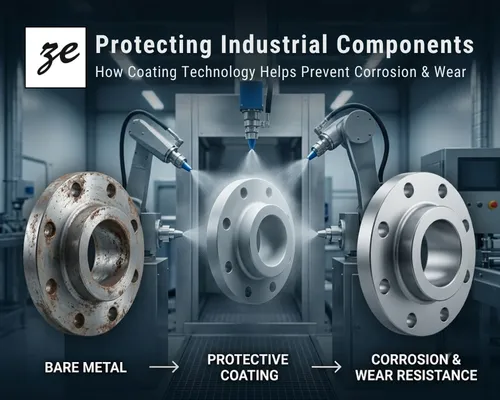
Protecting Industrial Components: How Coating Technology Helps Prevent Corrosion and Wear
Industrial components often operate in difficult environments. They may come into contact with moisture, chemicals, salt water, high temperatures, abrasive materials, or continuous friction. Over time, these conditions can damage metal surfaces, reduce component life, increase maintenance costs, and even cause unexpected equipment failure.
This is where industrial coating technology becomes important. A suitable coating creates a protective layer between the metal surface and its surrounding environment. Depending on the application, coatings can help control corrosion, reduce friction, improve abrasion resistance, and extend the working life of valuable components.
For industries using Duplex Steel and Super Duplex Steel, coatings can provide an additional level of protection when components face especially aggressive operating conditions.
Why Do Industrial Components Need Protection?
Corrosion is one of the most common causes of metal deterioration. When steel is exposed to water, oxygen, chemicals, chlorides, or other corrosive substances, its surface can gradually break down. In industries such as oil and gas, marine engineering, chemical processing, desalination, and power generation, this problem can become even more serious.
Wear is another concern. Moving components, pipelines carrying solid particles, valves, and machinery can experience repeated friction or impact. Abrasion and erosion slowly remove material from the surface.
Even corrosion-resistant alloys can benefit from the right surface protection when operating under severe conditions. Duplex Steel itself offers strong resistance to pitting, crevice corrosion, stress corrosion cracking, abrasion, and erosion, making it suitable for demanding industrial applications.
How Industrial Coating Technology Works
Industrial coatings are designed to form a protective barrier over a component. The coating system selected depends on the metal, operating temperature, chemicals involved, mechanical loads, and expected service life.
Common technologies include epoxy coatings, powder coatings, galvanizing, electroplating, anodizing, and other specialized surface treatments. Zeon Exports also lists coating processes such as galvanizing, electroplating, powder coating, porcelain enamel coating, and epoxy coating among its engineering services.
The basic purpose is simple: keep damaging elements away from the underlying metal surface.
For example, imagine a pipe installed in an area with high humidity and chemical exposure. Without appropriate protection, the external surface may gradually deteriorate. An anti-corrosion coating for industrial components can provide a barrier that helps reduce direct exposure and slows down surface degradation.
Anti-Corrosion Coating for Industrial Components
Different components require different protection strategies. Large structural parts may require coatings designed for atmospheric exposure, while small precision components may need specialized finishes.
Sheets & Plates can be coated when they are used in tanks, equipment housings, platforms, and fabricated structures exposed to moisture or chemicals. Structural Profiles may also benefit from protective coatings when used in industrial frameworks, supports, and outdoor installations.
For piping systems, coating selection can be particularly important. Pipes & Tubes may experience external atmospheric corrosion or internal wear depending on the material being transported. The correct coating system can help protect surfaces and support longer service intervals.
Components such as Flanges and Fittings also deserve attention because connection points can be exposed to moisture, chemicals, and difficult maintenance conditions.
Wear-Resistant Industrial Coatings
Corrosion is not the only problem. In applications involving constant movement, high-speed flow, particles, or mechanical contact, surface wear can become a major concern.
This is where wear-resistant industrial coatings can help. These coatings are developed to improve resistance against abrasion, erosion, friction, or repeated contact.
Consider an industrial valve handling a fluid containing suspended particles. Continuous flow can gradually wear internal surfaces. A suitable protective system, combined with the right base material and design, can help reduce surface deterioration.
Industrial Valves used in demanding flow-control applications can therefore require careful consideration of both material selection and surface protection.
Protecting Fasteners, Fittings and Connection Points
Small components are sometimes overlooked, but their failure can affect an entire industrial system. Bolts, nuts, studs, and other Fasteners may be exposed to moisture, chemicals, salt spray, and temperature changes.
Appropriate coatings can help improve their surface protection and make them more suitable for specific environmental conditions. The same principle applies to Fittings, which connect sections of piping and must maintain dependable performance throughout service.
When coating a component, engineers should consider compatibility between the coating and the base material. Surface preparation is also important because contaminants, oil, rust, or moisture can reduce coating adhesion.
Choosing the Right Protective Coating
Selecting protective coatings for metal components should never be based only on appearance or price. The operating environment should be considered first.
Important factors include:
- Exposure to water, humidity, or seawater
- Contact with acids, alkalis, or chemicals
- Operating temperature
- Abrasion and mechanical wear
- Expected service life
- Surface preparation requirements
- Compatibility with the base metal
- Maintenance and inspection requirements
A coating that works well in an indoor environment may not be appropriate for an offshore installation. Similarly, a coating designed for corrosion protection may not provide enough resistance to heavy abrasion.
For this reason, coating selection should be treated as part of the overall engineering process rather than as an afterthought.
Material Selection and Coating Should Work Together
Coating technology is most effective when combined with appropriate material selection. Zeon Exports supplies Duplex and Super Duplex Steel in forms including Round Bars, Sheets & Plates, Pipes & Tubes, Structural Profiles, Fasteners, Fittings, Flanges, and Industrial Valves.
For example, Duplex and Super Duplex grades already provide strong corrosion resistance and mechanical strength. In particularly demanding environments, a suitable coating can add another protective layer while the alloy provides its inherent material properties.
This combination can be valuable for equipment where downtime, replacement, and maintenance are expensive.
Final Thoughts
Modern corrosion and wear protection coatings provide industries with an effective way to improve component durability. The right coating can help protect surfaces from moisture, chemicals, abrasion, erosion, and everyday environmental exposure.
However, coating alone is not the complete solution. The best results come from considering the base material, operating environment, component design, surface preparation, coating system, and inspection requirements together.
For critical industrial applications, choosing high-performance materials such as Duplex Steel and Super Duplex Steel and combining them with suitable surface protection can help create components designed for longer and more reliable service.
About Zeon Exports
Zeon Exports is a Mumbai-based supplier specializing in Duplex Steel, Super Duplex Steel, Nickel Alloys, and other exotic alloy products. Its product range includes round bars, sheets and plates, pipes and tubes, structural profiles, fasteners, fittings, flanges, and industrial valves. The company also provides engineering services including machining, forging, fabrication, coating, heat treatment, logistics, customization, piping package solutions, and testing.
- Address: A-7/9, Saboo Building, Ardeshir Dady Cross Lane, Cawasji Patel Tank Road, Mumbai – 400004
- Phone: +91 98205 33105
- Email: sales@zeonexports.com
- Website: www.zeonexports.com
Related Blog Posts
Super Duplex Steel Fasteners: Strength & Coating Options
Why Engineers Choose Super Duplex Steel for Extreme Environments
Frequently Asked Questions
Q1. What is industrial coating technology?
Industrial coating technology involves applying a protective layer to a component to improve resistance against corrosion, abrasion, chemicals, moisture, or other environmental factors.
Q2. What is an anti-corrosion coating for industrial components?
It is a protective coating designed to reduce the exposure of a metal surface to corrosive elements such as moisture, oxygen, chemicals, and chlorides.
Q3. Can coatings improve wear resistance?
Yes. Specialized wear-resistant industrial coatings can help reduce surface damage caused by friction, abrasion, erosion, and repeated mechanical contact.
Q4. Do Duplex and Super Duplex Steel components need coatings?
Not always. These alloys already offer strong corrosion resistance. However, coatings may provide additional protection when components operate in particularly aggressive or abrasive environments.
Q5. How should the right coating be selected?
The selection should consider the base material, temperature, chemicals, moisture, abrasion, operating conditions, expected service life, and required surface preparation.