


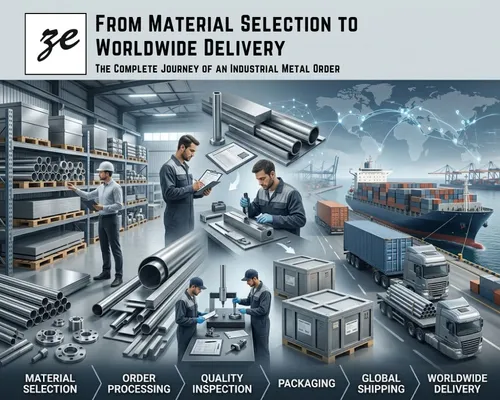
From Material Selection to Worldwide Delivery: The Complete Journey of an Industrial Metal Order
Ordering industrial metals for an international project is much more than choosing a grade and arranging shipment. Behind every successful delivery is a carefully managed process that begins with understanding the application and ends with the material reaching the customer's site in the required condition.
For industries such as oil and gas, chemical processing, marine engineering, power generation, desalination, and fabrication, even a small mistake in material selection can create serious problems later. This is why working with an experienced Duplex Steel & Super Duplex Steel Supplier such as Zeon Exports can make the entire purchasing process smoother and more reliable.
1. Understanding the Project Requirement
Every order begins with the customer's technical requirement. The buyer may provide a purchase specification, drawing, bill of materials, project standard, or simply details about the operating environment.
Important information includes material grade, dimensions, quantity, applicable standards, testing requirements, surface finish, tolerances, and delivery location.
For example, an engineer working on a seawater application may require Alloy 2205 or Super Duplex 2507 because of the need for strength and resistance to chloride-containing environments. The product form can also vary according to the application, from Round Bar for machined components to Sheets & Plates for fabrication.
The first objective is always to match the right material with the actual service conditions.
2. Material Selection and Order Planning
Once the requirements are understood, the appropriate grade, product form, size, and quantity are confirmed. Duplex Steel and Super Duplex Steel are available in different grades, so technical details must be checked carefully before an order is finalized.
The requirement may include Pipes & Tubes for process lines, Flanges for pipe connections, or Fittings for changes in direction and piping configuration.
At this stage, specifications are reviewed against the customer's purchase order so that material, dimensions, standards, and documentation requirements are clearly understood before procurement or production begins.
3. Procurement, Manufacturing and Traceability
After order confirmation, the required material is sourced or prepared according to the agreed specifications. Depending on the product, processes may include forging, rolling, cutting, machining, forming, heat treatment, or other manufacturing operations.
Traceability is an important part of this stage. Material identification should remain connected to the relevant heat number, batch information, test records, and certificates throughout the process.
This becomes especially important for products such as Fasteners, where dimensions, grade, thread details, mechanical properties, and identification all need to match the purchase requirement.
4. Industrial Metal Quality Testing
Quality testing verifies that the supplied material meets the specified technical requirements. The exact tests depend on the grade, product type, standard, and project specification.
Material testing and certification may include chemical composition analysis, tensile testing, hardness testing, dimensional inspection, visual examination, and other applicable examinations. For Duplex and Super Duplex materials, testing and documentation help confirm that the material supplied corresponds to the specified grade and standard.
Mill Test Certificates provide important information such as chemical composition, mechanical properties, heat number, product details, and applicable standards. For project orders, additional testing may also be required according to the customer's inspection and test plan.
5. Pre-Shipment Inspection for Metal Products
Before dispatch, the order undergoes a final review. This is where pre-shipment inspection for metal products becomes valuable.
The inspection team checks quantity, dimensions, markings, surface condition, packaging, product identification, and documentation. The goal is simple: make sure the material being shipped is the same material that was ordered.
For certain projects, customers may also request an inspection of Industrial Valves, including checks related to construction, dimensions, pressure testing, markings, and documentation.
6. Third-Party Inspection for Industrial Metals
Large international projects sometimes require independent verification before shipment. In such cases, a customer-appointed inspection agency can perform third-party inspection for industrial metals.
The inspector may review material certificates, verify heat numbers, witness tests, check dimensions, examine products visually, and confirm compliance with the agreed inspection plan.
This independent step provides additional confidence to buyers, EPC contractors, consultants, and project owners, particularly when materials are being shipped across borders.
7. Documentation and Final Quality Inspection
A successful industrial metal order is supported by more than the physical products. Documentation is equally important.
Depending on the project, the final document package may include material test certificates, inspection reports, dimensional reports, test records, packing lists, commercial invoices, certificates of origin, and other required export documents.
For structural applications, products such as Structural Profiles may also require project-specific dimensional and material documentation.
This complete quality inspection for global metal projects helps the customer maintain traceability from the delivered material back to its original test records.
8. Packaging, Logistics and Worldwide Delivery
Once inspection and documentation are complete, the materials are prepared for shipment. Packaging depends on the product type, dimensions, weight, destination, and transportation method.
Proper bundling, wrapping, protection, marking, and loading help reduce the risk of damage during handling and transportation. Export documentation is also coordinated so that the shipment can move efficiently through the required logistics process.
From the supplier's facility to the port, and from the port to the customer's destination, coordination is essential. A reliable exporter understands that on-time delivery is not simply about shipping quickly; it is about planning the complete movement of the order.
Why the Complete Process Matters
A dependable industrial metal supplier should provide more than a product catalogue and a quotation. Customers need confidence that the correct material has been selected, tested, inspected, documented, packed, and delivered according to project requirements.
Zeon Exports supports customers with Duplex Steel, Super Duplex Steel, Nickel Alloys, and other industrial metal products for demanding applications. Its product range includes round bars, sheets and plates, pipes and tubes, flanges, fittings, fasteners, industrial valves, and structural profiles. The company also highlights in-house cutting and machining capabilities and logistics connectivity through road, air, and sea networks.
For a global project, every stage matters. When material selection, testing, inspection, certification, packaging, and logistics work together, an industrial metal order becomes a controlled process rather than simply a purchase.
Contact Zeon Exports
- Address: A-7/9, Saboo Building, Ardeshir Dady Cross Lane, Cawasji Patel Tank Road, Mumbai – 400004
- Phone: +91 98205 33105
- Email: sales@zeonexports.com
- Website: www.zeonexports.com
For Duplex Steel, Super Duplex Steel, and other industrial metal requirements, contact Zeon Exports to discuss your project specifications, testing requirements, documentation, and worldwide delivery needs.
Frequently Asked Questions
Q1. Why is material selection important for industrial metal orders?
The correct grade must match the project's operating conditions, mechanical requirements, corrosion exposure, temperature, dimensions, and applicable standards.
Q2. What is included in industrial metal quality testing?
Depending on the order, testing may include chemical analysis, tensile testing, hardness testing, dimensional checks, visual inspection, and other specified examinations.
Q3. What is pre-shipment inspection for metal products?
It is a final inspection before dispatch to verify product quantity, dimensions, identification, condition, packaging, and required documentation.
Q4. When is third-party inspection required?
Third-party inspection is commonly requested for major industrial projects when the buyer, EPC contractor, consultant, or project specification requires independent verification.
Q5. Why are material certificates important?
Material certificates provide documented evidence of material identity and test results, helping customers maintain traceability and verify compliance with the purchase requirements.