


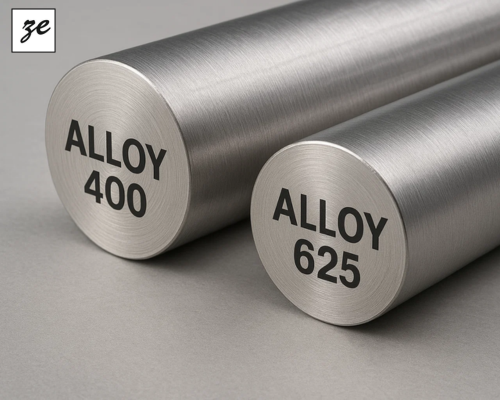
Does Your Project Need Alloy 400 or Alloy 625? A Practical Buyer Comparison
Choosing the right alloy for an industrial project is a decision that directly affects performance, safety, and long-term cost. Among the most widely used nickel alloys today, Alloy 400 and Alloy 625 are trusted for their excellent corrosion resistance and durability. But which one is right for your project? In this guide, we break down the differences in simple, practical language so buyers, engineers, and procurement teams can make informed decisions.
This comparison will help you clearly understand where each material performs best, how they differ, and what Zeon Exports can supply to support your project needs.
Understanding the Basics
Before diving into selection, it is important to know why both alloys are popular.
- Alloy 400 is a solid-solution nickel-copper alloy known for outstanding resistance to seawater and alkaline environments.
- Alloy 625 is a nickel-chromium-molybdenum alloy designed for extreme strength, heat resistance, and protection against aggressive corrosive media.
Both materials are reliable, but their performance and price vary depending on the application. That’s why many buyers often ask:
Does Your Project Need Alloy 400 or Alloy 625? A Practical Buyer Comparison becomes essential when choosing between these two.
Composition Differences
The chemical composition of the two alloys determines their behaviour under different conditions.
Alloy 400 Composition:
- 63% Nickel
- 30–35% Copper
- Small amounts of Iron, Manganese, and Carbon
This composition makes Alloy 400 exceptionally tough in seawater, salt solutions, and alkaline environments.
Alloy 625 Composition:
- Minimum 58% Nickel
- 20–23% Chromium
- 8–10% Molybdenum
- 3.15–4.15% Niobium
This blend results in superior strength, oxidation resistance, and the ability to handle high-temperature and high-stress environments.
Performance Comparison
1. Corrosion Resistance
If corrosion resistance is your top priority, understanding the environment is important.
Alloy 400 excels in:
- Marine applications
- Brine solutions
- Mild acids and alkalis
- Hydrofluoric and sulfuric acid (in limited conditions)
Alloy 625 performs better in:
- Highly acidic environments
- Chloride-rich media
- Oxidising and reducing environments
- Chemical processing plants
When asking Does Your Project Need Alloy 400 or Alloy 625? In a Practical Buyer Comparison, corrosion resistance becomes a key factor.
2. Temperature Resistance
- Alloy 400: can tolerate temperatures up to 550°C, suitable for moderate-temperature systems.
- Alloy 625: can withstand temperatures up to 980°C, making it ideal for extreme heat applications like gas turbines and furnace components.
3. Mechanical Strength
- Alloy 625: is significantly stronger due to the presence of niobium and molybdenum.
- Alloy 400: provides good strength but is more suitable for moderate-pressure conditions.
If your project needs high strength, Alloy 625 is the preferred choice.
Where Each Material is Used
Common Applications of Alloy 400:
- Heat exchangers
- Marine components
- Piping in chemical and petrochemical plants
- Oil and gas processing equipment
- Pump and valve components
Common Applications of Alloy 625:
- Aerospace components
- High-temperature furnace parts
- Chemical processing
- Offshore platforms
- Nuclear reactors
- High-pressure equipment
Cost Comparison
Alloy 625 is generally more expensive due to its high-value elements and superior performance.
Buy Alloy 400 if you need:
- Corrosion resistance in marine or alkaline environments
- A cost-effective solution
- Moderate strength requirements
Choose Alloy 625 if you need:
- High strength
- High temperature performance
- Protection in highly corrosive conditions
How Zeon Exports Supports Your Material Selection
At Zeon Exports, we supply both materials in multiple forms, such as pipes, plates, sheets, coils, tubes, fittings, and fasteners. Our team guides buyers with technical comparisons, certifications, and international standards to ensure you receive the right material for your project.
We also offer:
- Mill test reports
- Export-grade packaging
- Competitive pricing
- Global delivery
Whether your requirement is small or bulk, Zeon Exports ensures precision, quality, and trusted sourcing.
Frequently Asked Questions (FAQ)
1. Which alloy is stronger, Alloy 400 or Alloy 625?
Alloy 625 is much stronger due to its advanced composition, including niobium and molybdenum.
2. Is Alloy 400 suitable for high-temperature applications?
It can handle moderate temperatures up to 550°C, but Alloy 625 is better for extreme heat.
3. Which alloy is better for marine applications?
Alloy 400 is traditionally used for marine systems due to its excellent seawater resistance.
4. Why is Alloy 625 more expensive?
Alloy 625 contains premium elements and provides higher strength and corrosion resistance.
5. Does Zeon Exports provide material certificates?
All products come with proper MTC documentation.